Salty Vanilla and Cardamom Caramels

I’ve been having a really intense crafting itch lately. I don’t know if it came from the upsurge of holiday spirit and the homemade gift guides I’ve been poring over. Or it could be a way to procrastinate from studying for my finals. But maybe it’s my outlet for the angst and worry I have over the fact that in only one week, I’ll have one semester of college left before the real world hits. “Oh, to only be able to make pretty little crafts for a living and get rich by writing a book on it,” is what the dream world in my mind might be telling me. Sounds a whole lot nicer than what reality is telling me…“you’ll never find a job with a career in media studies.”

I’ve been searching for an excuse to create prettily wrapped edible gifts for a while. I’ve had a Michael’s supplies lists and a hoard of recipes ready to roll and this past weekend the opportunity came about to make use of some of that. I finished my internship this week and of course I needed a parting gift, right? Move over CSS Web Styling Guide and hello candy thermometer. But what to make? Then I remembered that last Christmas, in London, I would go to the Melt counter at Selfridges and buy one of their salted vanilla caramels for a mere pound and would sneak little sweet bites throughout the day. They were wrapped up in a square of parchment, the ends twisted up tight so that the caramel squeezed against the paper hinting at the greasy yet beautiful butteriness within. Thinking of those, I had to make them.

I used this Ina Garten recipe because it had the best reviews but with some slight changes. The major change is that I didn’t use fleur de sel. Don’t get me wrong; I was more than ready to pay the hefty price for the lovely delicate salt, but in this small town, it was nowhere to be found. I used pink Himalayan sea salt instead, which was actually still nice. I also infused them with some cardamom too to give a richer, smoky flavor and dipped them halfway in some nice dark chocolate just for the sake of it.

They turned out wonderfully, cooked to the firm ball stage so that they are sturdy but still turn into a puddle the second they touch my tongue. They firm up quite a bit in the fridge (which really worried me at first because I thought I overcooked it and made brittle) but just a few minutes at room temperature softened them up to optimal chewiness. These are not those caramels that most liken to instant cavities. These don’t have the time to stick to the teeth before they melt into creamy sweetness. The salt makes the slightly burnt sugar taste stand out even more and the spices add depth without overwhelming the caramel. Finally, the chocolate...well, enough said. I wrapped these too with parchment, popped them in a craft paper box with some burgundy raffia, whipped up a little label and tied it all together with some twine. 

I will probably have to take a little break from the baking next week (that’s what I say now) but once the tests are finished and I’m back home with nothing but time and Christmas cheer, the candies, cookies, and crackers and fun packages are going to make a massive appearance. My friends and I took an oath of no gift exchanges this year but surely they’ll forgive me for succumbing to my need to bake and craft. In the mean time, however I’ll make do with this fabulous creation: rum balls, malt balls, ice cream…sound like a finals week savior!

Salted Caramels
adapted form Ina Garten
makes 32 caramels

Ingredients
1½ cups sugar
¼ cup light corn syrup
¼ cup water
1 cup heavy cream
5 Tbs. unsalted butter
½ vanilla bean, split and seeds scraped out
1 tsp. cardamom
1 tsp. fine sea salt or fleur de sel plus more for sprinkling
4 oz. good dark chocolate

Line an 8 inch square baking dish or pyrex dish with parchment paper, letting it hang over two sides (this will make it so you can lift the caramels out). Lightly oil the paper with vegetable oil. In a deep saucepan, combine the water, sugar, and corn syrup and bring it to a boil on medium-high heat until it is golden brown in color. Do not stir but occasionally swirl the pan. Meanwhile, in another saucepan, bring the cream, butter, vanilla seeds and pod pieces, cardamom, and salt to a simmer. Once simmering, remove from heat, remove the vanilla pods, and set aside.

Once the sugar is done boiling, remove from the heat and VERY CAREFULLY, pour in the cream mixture while stirring with a wooden spoon. Once all combined, return to a medium-low heat and let cook, without stirring until it reaches 248 degrees on a candy thermometer or firm ball stage. Once it reaches temperature, pour into the prepared pan and smooth out the top with the wooden spoon to pop any bubbles. Place in the refrigerator for a few hours to set. Once set, take out of the refrigerator and remove from the pan by pulling up on the parchment. It you have trouble taking it out, dip the bottom of the pan in a bowl of hot water until it comes loose. Cut the caramels into 32 pieces and store in the refrigerator until you are ready to dip them in the chocolate.

When ready to dip them, place a metal bowl over a pan of shallow simmering water to make a double boiler. Place the chocolate in the bowl and stir until melted. Dip the caramels halfway in the chocolate and place them on a parchment-lined sheet to harden. Sprinkle each with a little bit of the salt. Once the chocolate has completely hardened, wrap them in parchment squares and store either in the refrigerator or at room temperature.
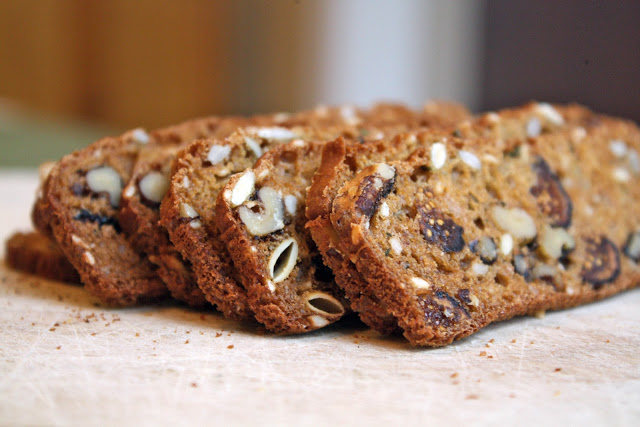
Holiday Snack (CRACK)ers

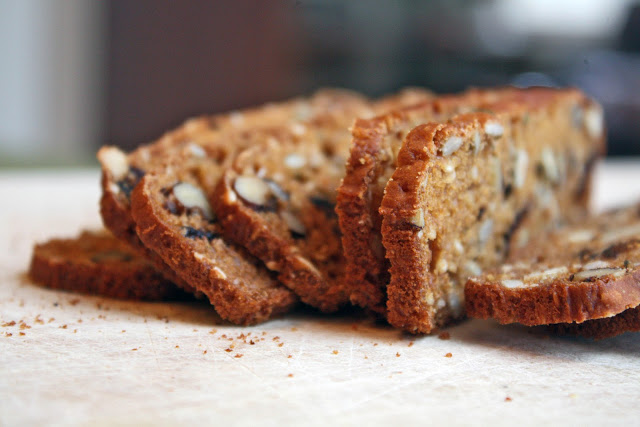
Do you know what these little morsels are? These are possibly some of the most uniquely flavored, amazingly textured, little biscuits I’ve had…ever. That’s why the are (crack)ers. They’re drugs in snack form. They’re addicting to the point where you can’t ever seem to stop yourself from going for another sweet and savory crunchy bite. Yet, believe it or not, this is one addiction that you won’t regret making.  Because, despite the rich butteriness and the sweet, caramelized crispness of these crackers, they are VERY healthy. No fats and oils here. Just sweet dried figs, tons of nuts and seeds, woodsy rosemary, a dash of whole wheat, natural honey, and a lot of creamy, yet low-fat, buttermilk.

These crackers could possibly be a little bit of a lifesaver this Christmas season. Flavor-wise they are just as satisfying as the masses of cookies, sweets, and other naughty things you’ll be tempted with. Yet you will know that they are actually on the nice list. And with such a great crunch, they’ll be a real stress-reliever when the craziness of the holidays makes you feel like you could just…crack.

They are the easiest things to put together and the batter is pretty much assembled in one bowl. The whole process is a lot like making biscotti yet so much simpler and cleaner. The batter is split between two loaf pans and let to cook until golden and spongy. They cool completely, spend some time in the freezer to firm up and are then sliced into paper thin pieces before being toasted to nutty crispness in the oven.

The flavor is a little hard to describe. They definitely have sweetness from the honey that becomes almost molasses-like is it caramelized with the toasting. They also have they unusual tanginess from all of the buttermilk. A rich buttery smell permeates the whole house as it cooks, which strangely actually comes from the rosemary. Though herby there is a caramel-like undertone. It’s a smell that is reminiscent of fireplaces, cool, snow-dusted forests, and sweet toffees. And finally, the extraordinary number of figs and nuts adds lots of texture layers and rich toasty flavors.

There is a lot of potential for ways to top these crackers. We enjoyed them with chesees of all sorts; sharp, aged cheddar cheese, brie, smoked gouda, or a simple smear of mascarpone. Though I’m sure there are so many other uses for these. In fact, I almost liked them best plain. I am also really interested in swapping out some other ingredients for other to make an apricot, pistachio, cardamom crackers or dried cherry, pecan, and thyme, maybe even candied orange, almond, and tarragon. The possibilities seem endless. I hope you try these out in your own home and even consider them as a nice gift along with some cheese and snack bowls.

Holiday Snack (CRACK)ers
Makes about 70 crackers
adapted very slightly from Seven Spoons

Note: It can be a little hard to tell when these are done toasting because they stay soft while in the oven and don’t crisp up completely until after cooling. So, I would start at 15 minutes per side and if they still seem a little softer after cooling, pop them back in the oven for five minutes at a time until they reach good crispiness. But be careful not to burn them! Also, if they start to get soft after a few days form air moisture (if they last that long) you can again place them back in a 250 degree oven for 5-7 minutes, let them cool, and they will be perfect again.

Ingredients
½ cup chopped walnuts
¼ cup pepitas (pumpkin seeds)
1½ cups all-purpose flour
½ cup whole-wheat flour
2 tsp. baking soda
1½ tsp salt
2 cups buttermilk
¼ cup brown sugar
¼ cup light honey
1 cup chopped dried figs
¼ cup shelled sunflower seeds
¼ sesame seeds
1½ tsp finely chopped rosemary

Preheat the oven for 350 degrees and grease two 9 by 5 inch loaf pans with butter or cooking spray.

Place the walnut pieces and the pepitas on a baking sheet and toast in the oven for 10 minutes. Set aside to cool.

In a large mixing bowl, combine the flours, baking soda and salt. Add in the brown sugar, honey, and buttermilk and stir with a wooden spoon until just combined. Add the toasted nuts and the rest of the ingredients and stir to mix them in.

Divide between the two pans and bake about 35-40 minutes until golden and the top springs right back when you lightly poke it. Remove from the pans and leave to cool. Once fully cooled, wrap them up well and place them in the freezer until firm. This makes it much easier to slice and actually, it lets you slice up however many crackers you want to make at a time and leave the rest of the loaf in the freezer for later.

For the toasting, heat the oven to 300 degrees. Slice the frozen loaves into ¼ inch (or even a little less if you can) pieces and place them in one layer on a cookie sheet. Bake them for 15 minutes on one side, flip the crackers over, and then 15 minutes on the other side. Cook on a wire rack. Again, if they are too soft, continue to toast at 5-minute intervals until very crunchy.

Pumpkin Brioche

Well technically I should call this Heirloom Blue Hubbard Squash Brioche but that just sounds a little unappealing now doesn’t it. So let’s just keep things easy and stick with pumpkin. Now, I know that my posts from the last few months have been a little pumpkin overkill but can you blame me for taking advantage of the plethora of winter squashes available? And it was just Thanksgiving so I would dare to say that NOT having a holiday pumpkin post would be plain wrong.

So anyway, I was heading home for break with an interesting vegetable in tow, a blue hubbard squash I picked up as the farmers market for a dollar. I had zero plans for it and it had been sitting in my pantry for two weeks.  I can only imagine what my roommate thought of me every time she saw the bulbous object, grey, rough, and elephantine, propped alongside my pretzels and pasta like some sort of Jurassic fossil. But the kind man who sold it to me swore it was sweeter and smoother than a pumpkin, so I was sold…but what to do with it.

I looked to the farmers market for yet another idea. A week earlier I bought a delicious loaf of pumpkin brioche, but for $5 per mini-loaf I was determined to make it for my own. So I eventually I found this recipe and tried it out with my curious little squash. And oh was it delicious. Not only does it make three medium-large loaves, but somehow my own bread was such lighter, more tender, and of course was quite the bargain comparably.

I started by roasting my squash, letting it caramelize a bit before pureeing the flesh. The grayish blue skin actually imparted this slight green hue to the yellow flesh giving the squash puree an odd neon color yet, despite the funny look, it tasted purely like pumpkin and was unbelievably smooth. In my mixer I combined the squash with flour, yeast, and a load of eggs before finally slowly mixing in two whole sticks of butter, letting the fat coat each and every gluten strand for maximum tenderness. I impatiently waited as it rose slowly in the fridge overnight but the dough the next day was soft and supple and easily formed into tight, spongy loaves. They came out of the oven looking picture perfect; marbled, deep-brown and flaky crusts encased the hidden, yet soon-to-be-discovered, orange and squishy crumb.

As if I have not expressed this enough, this bread is so soft. I’m sure that the cup of butter is the culprit but think that the addition of the velvety squash made it even more supple than just regular brioche. And we took advantage of this bread’s culinary uses in any way we could. The next day my mom and I soaked thick pieces in milk, eggs, and vanilla and cooked it on a griddle for custardy and sinful French toast. We ate it for breakfast, both toasted and not, smeared with mascarpone cheese, walnuts, and a drizzle of honey. We had it as a side to our Thanksgiving dinner, lightly coated with butter. And today, I even put leftover turkey, gravy, cranberry sauce, and spinach between two slices of the bread for the ultimate Thanksgiving leftover sandwich. It is perfection.

Pumpkin (or squash) Brioche
adapted from Hungry Oyster
makes 3 loaves

Don’t be afraid by how long the bread takes. The actual labor involved with making the bread is really simple and the dough it quite easy to work with. Also, don’t be tempted to add too much extra flour. The dough will be sticky at first but the gluten will really toughen and relax as it sits overnight and it becomes much easier to work with.

Ingredients
For the sponge:
¼ cup milk, at room temperature
2½ tsp. instant yeast
1 cup pumpkin or squash puree, canned is fine but fresh is suggested
1/3 cup sugar
1 cup bread flour (I used King Arthur organic)

 For the dough:
5 cups bread flour
2 tsp. salt
1 tsp. cinnamon
6 large eggs, room temperature and lightly beaten
2 sticks softened unsalted butter

For the egg wash:
1 egg, lightly beaten with 1 tsp. water

First make the sponge. In the bowl of a standing mixer, whisk together the milk and yeast and let sit for 5 minutes. Add the pumpkin or squash puree, sugar, and 1 cup of flour to the milk and yeast. Stir to form a paste, cover with plastic wrap, and let rise in a warm place for 30-40 minutes.

After rising, place the bowl in the standing mixer fitted with the paddle attachment. Add the 5 cups of flour, salt, cinnamon, and eggs and mix on low for 2 minutes. Increase the speed to medium and let the mixer knead the dough for about 5 minutes while occasionally scraping the dough off the paddle. Then, on a medium low speed, add the butter, 2 Tbs. at a time. Let the dough incorporate the butter and then continue mixing for about 5 minutes or until everything is combined and the dough is shiny and smooth.

Scrape the dough from the bowl and form into a ball, adding any extra flour as needed, but again be careful to not add too much. Transfer to a lightly oiled bowl and roll around to coat the surface of all the dough with the oil. Cover the bowl and let rise at room temperature for 2 hours. After this time, punch down the dough, reform it into a ball, and cover again with plastic wrap. Let rise in the refrigerator overnight.

The next day, remove the dough from the fridge and transfer to a lightly floured surface.  Lightly oil three 9 X 5 X 3 inch loaf pans. Cut the dough into thirds and use a floured rolling pin to roll to roll each piece onto a rectangle that is 1½ times as long as the loaf pan and twice as wide. Starting from the short side, roll up the dough like a jellyroll sealing the loose edges and ends when you reach the end. Place the dough into the pan, seam side down and gently press down on the dough to spread it out across the bottom of the pan as much as possible. Cover the three loaves with a towel and let rise for 2 hours.

10 minutes before the dough is done rising, preheat the oven to 400 degrees. Once the oven is heated, prepare the egg wash and brush over the tops of all three loaves. Place the tins in the center of the oven and cook for 10 minutes. Then lower the temperature to 350 and then continue to cook for 30 minutes, rotating the tins halfway through, until the crust is deeply golden and glossy. Remove from the oven and let cool for 10 minutes. Remove the bread from the tins and continue to cool on a rack until room temperature. Best if eaten within 3 days.

Food to Comfort

I never knew how I would deal with loss. I’ve seen others in grieving; some turn reclusive, letting emotions eat away inside, while others let them show outward. I guess I’m lucky to be 21 years old and never have had cause to suffer through grieving emotions. Not everyone I know can say that.

Today I did experience loss; the loss of a pet, our Bailey. My family and I treat our dogs like humans and equals and our attachments to them are enormously strong. The death of Bailey has therefore hit hard. He’s in a better place now, no longer in pain, but it will take a long time before I can get used to walking in the door and seeing only one dog at my feet rather than the normal two.

We cried, sat in silence, and even laughed some as we recounted memories. And then he was buried in the back yard. You can see him from the windows of our back room and our other dog has spent the entire day sitting on the back of the couch and staring at the little mound of dirt in the distance.

Instinctively I turned to cooking as a way to relieve the stress and the emotion. I needed something to do with my hands, something methodical, a mind-numbing cathartic sort of activity. I needed steam to rise from a pot and warm my heart, easing the ache. I needed rich smells to drench me in comforting calm. So I made gnocchi, letting thoughts settle as I rolled each piece mindlessly across a fork. And to go with the gnocchi, a rich beef ragout.

The recipe is here, though I made a few adjustments. I used stewing beef instead of venison and for the gnocchi, I used all-purpose flour, the whole egg, and added a handful of Parmesan to the dough as well. The gnocchi turned out a little gloopy but it didn’t really matter. The beef ragout, however, was deep and multilayered in flavor. The intensity of it brought out a spiciness of sorts and the beef tenderized wonderfully. The onion flavor was strong, but sweet, while nice red wine and bacon added lingering hints of smokiness. I went back for seconds, thirds, letting the warm broth wash away some pain. It was just what we needed after some very long and difficult last few days of eating nothing but peanut butter toast. It by no means solved the problem, but it certainly made things a little better.

A Bowl of Rice

Things are getting cold out there. It’s only mid-November but I woke up this morning feeling as if it could have been the dead of winter. Five blankets deep within my bed, I huddled in a little ball, burrowing myself under. Only my nose poked out to the world beyond, numb and pink like a little mouse. I left my house, plump with multiple coats yet despite the layers, the cold settled deep. I was in a cold mood, had cold thoughts. It’s been a cold sort of day.

A cold day calls for foods of comfort. Rich starches, warm flavors, long and slow cooking so that the heat of the stove permeates the house.  I made a simple bowl of white rice for dinner, that wholesome grain that I relied on so much for comfort as a child. The only thing I could stomach when sick and the cure-all for a bad day. Rice, butter, salt, pepper.

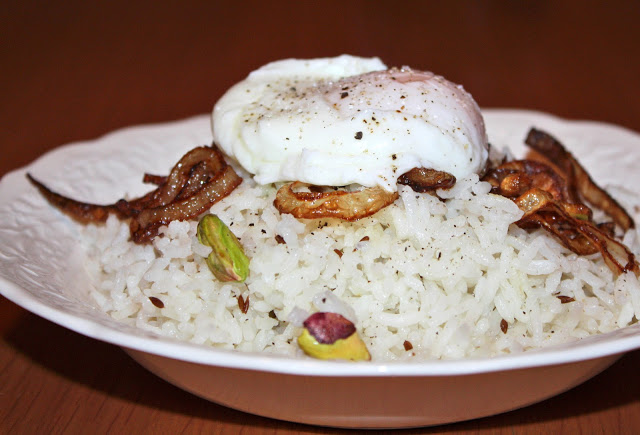
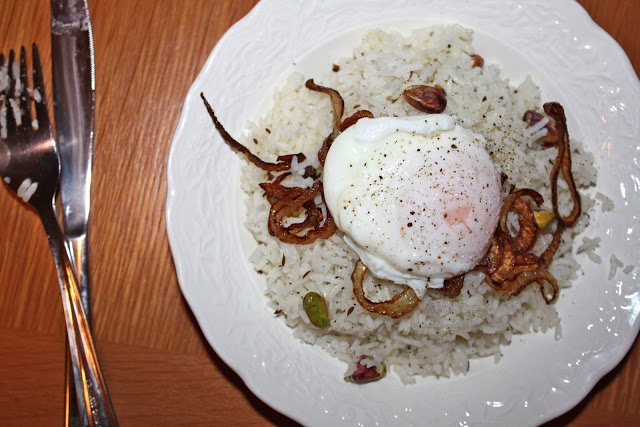
At the end of this long week, on the first day in a long time where I simply had nothing to do, on a Friday night when everyone else was busy and my thoughts a little bleak, I bundled up at home and made and basic yet elegant spiced Indian rice. It started with toasting an array of spices; cinnamon, cardamom, black peppercorns, whole cloves, a bay leaf, cumin seeds. The spices were tossed with white basmati rice and left to cook for several minutes in which time the air became perfumed with exotic aromas. Rich and sweet cardamom mingled with the bright and spicy cumin. All the while cinnamon filled my lungs with festive warmth and the toasting rice released deep floral nuttiness. Its smell almost visibly swirled seductively through the air, a belly-dancing courtesan of a smell. The rice, once finished, was topped with a sprinkling of pistachios, crispy fried shallots, and a fresh poached egg, The egg yolk coated the granules of rice for a rich and creamy sauce and each bite brought back a little warmth to the my body as the aromas first passed under my nose and into the mouth.

I know, I know, a little non-traditional for Friday night. Shouldn’t I be out having beer and greasiness and other college Friday night things? Well besides my general lack of “traditional”, I just know that it was alone-time sort of night. A night where I needed to sit down with a bowl of rice. The bowl now sits empty and all is good.

Spiced Indian Rice
Adapted from Journey Kitchen
serves 2-3 as a main dish

Ingredients
1½ cups white basmati rice
2¼ cups water
1½ Tbs. vegetable oil
1½ tsp. cumin seeds
2 whole cloves
2 black peppercorns
½ cinnamon stick
1 bay leaf
2 cardamom pods
1 shallot, cut into rings plus oil for frying
a handful of shelled pistachios
1 egg per person
salt and pepper

Wash the rice until the water runs clear and soak in water for an hour. After an hour, drain the excess water. In a deep and thick-bottomed saucepan with a lid or Dutch oven, heat the oil over medium heat. Add the cinnamon, bay leaf, cloves, peppercorns, and cardamom. Stir to coat with oil. Add the cumin seeds. When the seeds begin to pop, add the rice. Stir to coat and toast for 5 minutes, stirring occasionally. Once the rice has toasted, add the water and some salt, stir, turn the heat to high, and cook uncovered for 7-8 minutes until the water is almost absorbed. Cover with the lid, turn the heat to medium-low, and continue to cook for 5-7 minutes or until the water is absorbed completely.  Fluff the rice with a fork.

Meanwhile, put a pot on water or the stove and bring to a simmer. This will be for poaching the egg. Also, heat enough vegetable oil in a small frying pan to cover the bottom. Once hot, add the shallots and cook, stirring frequently until crisp and deep golden colored. Transfer to a paper towel to drain. When the water in the pot is simmering, crack the egg/s into the water and cook for about 4 minutes each. Remove from the water and let drain on a paper towel.

To assemble, place a good portion of the rice in a bowl. Top with salt and pepper and a little butter if you’d like. Scatter on the pistachios, onions, and the egg. Season with salt and pepper.

P.S. Be careful that you don’t confuse any of the cardamom pods with the pistachios. They look quite alike and that could lead to an interesting little surprise.