The Wild and Wonderful World of Kombucha
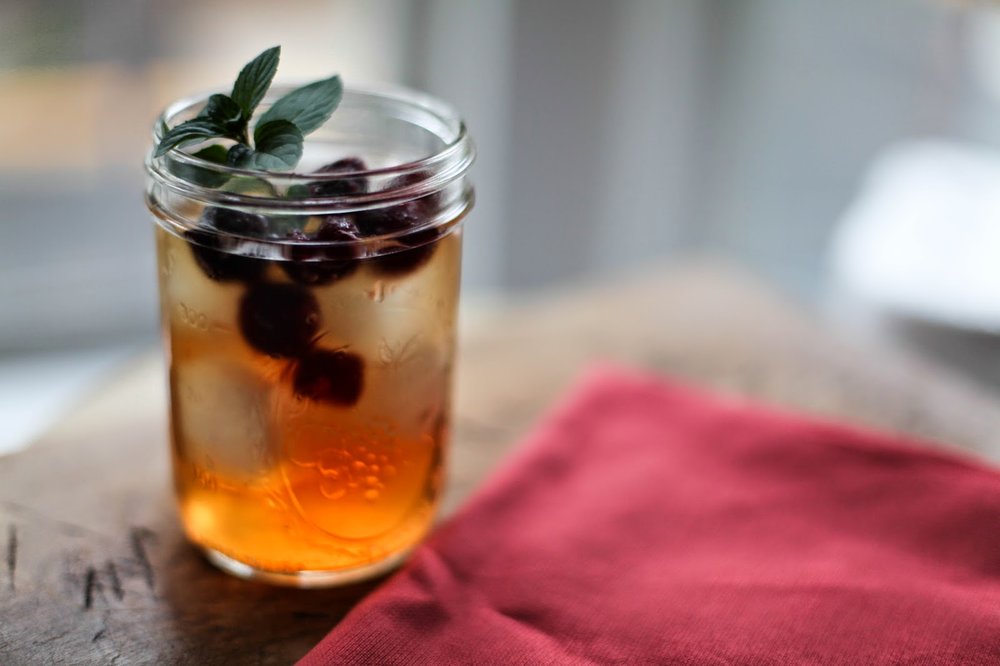
If you have known me at any point in the last few years, you have more likely than not been on the receiving end of a lengthy one-way discussion where I force you to learn about brewing kombucha.  I probably tricked you into trying it too. Thank you to you all for putting up with it. I am not sorry at all. But if you have not, it is finally your lucky day! After having started up the brewing process yet again about 2 weeks ago, I have now once and for all documented my strange, nerdy hobby.

It all began when Sarah from The Yellow House gave me my first culture, a piece of her own, to start brewing for myself. I fell in love with the process instantly and have been brewing on and off ever since. It’s one of the simplest fermentation projects you can take on with quick and delicious results but first, let’s step back and talk about what kombucha is in the first place.

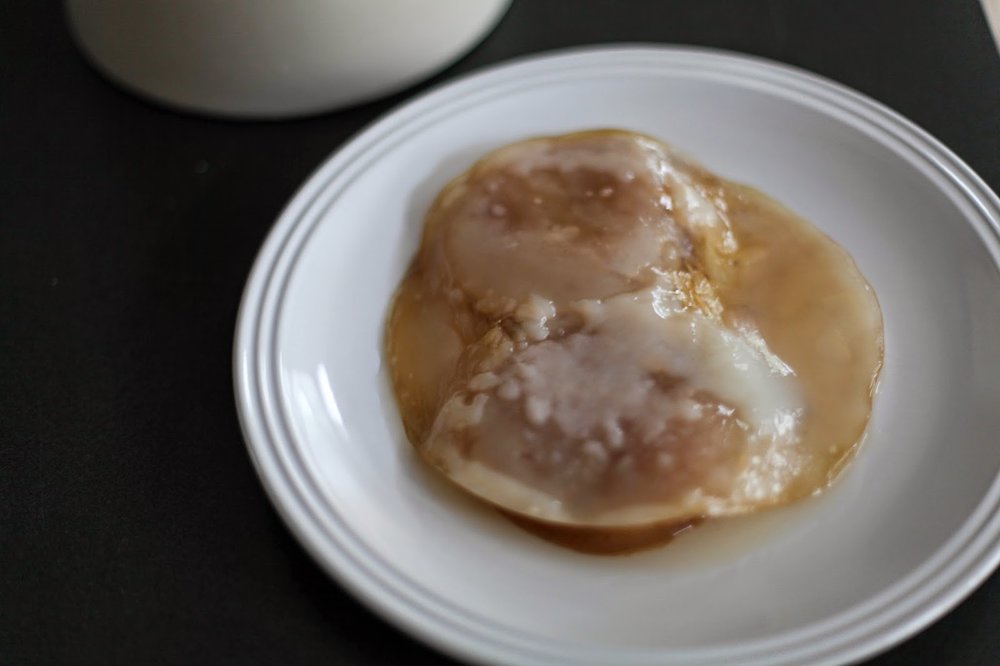
In short, it’s a fermented fizzy tea drink known for its probiotic properties. In order to brew your own, you need a starter culture, which is known as the “mother” or a “SCOBY”, meaning Symbiotic Colony of Bacteria and Yeast.  This cellulose mass may not be the most attractive thing in your kitchen and admittedly it’s difficult at first to trust any drink that’s been floating around with a SCOBY for a week, but once you get over that you can start to enjoy the wonderful aspects of kombucha.
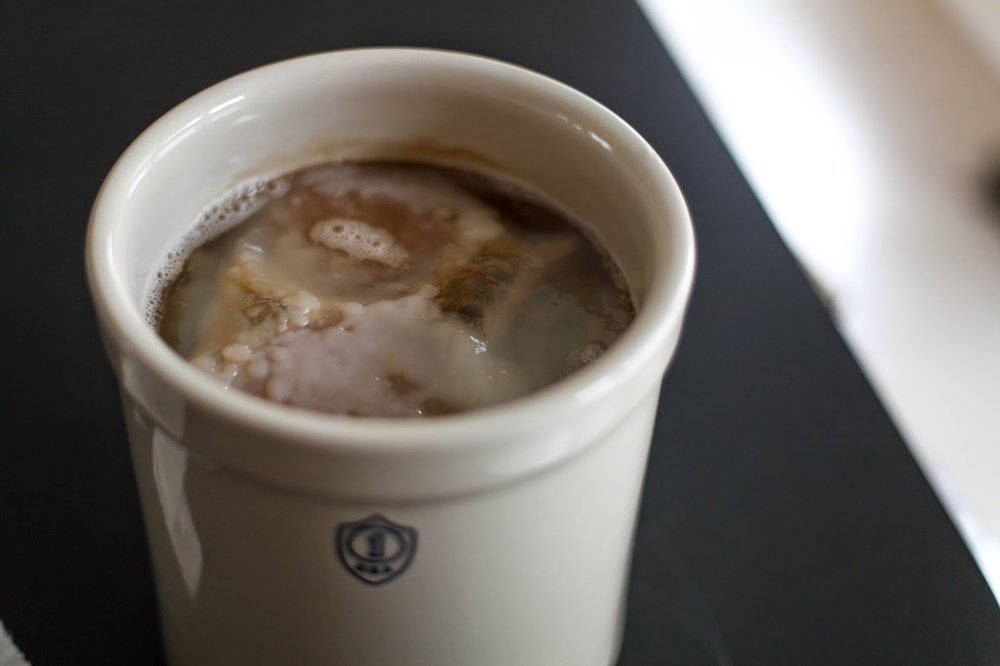
So when a SCOBY is combined with sweetened black tea, multiple processes take place. The yeast first starts to consume the sugar, creating a byproduct of carbon dioxide (fizziness) and alcohol. The bacteria then ferments the alcohol, creating acetic acid, giving the resulting kombucha that tangy, vinegar-like taste. All the while probiotics begin to inhabit the liquid and the living SCOBY begins to grow, taking on the shape of its container and developing another cellulose layer with every batch made. And eventually, once it gets large enough, you can peel off the bottom layers and pass them along to a friend who may also want to make kombucha. You can also compost them. This unending cycle of fermentation makes for a constant supply of this sweet and sour drink for as long as you continue to take care of your culture.

Although it took a few times to get used to the system of bottling my fermented kombucha and preparing a new batch, it soon became a part of my weekly routine. After a week of fermenting, I like to store my finished kombucha in the fridge, which stops the fermentation process and keeps the finished product at a mildly tangy level. I bring an iced glass to work each day and will add some fresh juice, fresh fruit, and/or some herbs to the glass for a little extra flavor. I purchased my most recent SCOBY from Kombucha Brooklyn and it has been doing great. Currently I’m in the process of trying to name it and so far my roommates have helped me come up with Scoby Dooby Doo, Scoby Wan Kenobi, and Scoby Bryant. I haven’t decided which I like best…

Kombucha Brooklyn has wonderful kits with all of the supplies and instructions needed for getting started. But, if you just so happen to have a nice friend to pass along a piece of SCOBY and all of the necessary materials, here’s how you can start brewing kombucha yourself.

How to Make Kombucha

Materials Needed

1 SCOBY, plus 2 cups of already-made kombucha from a previous batch, or store-bought if just beginning

8 teabags (Kombucha needs black tea to survive. I personally like Darjeeling but standard black or oolong would work as well. You can swap out one or two of the bags with a green or herbal tea if you want to mix up the flavor, but would not suggest any tea with essential oils like earl grey.)

1 cup white granulated sugar

1 gallon (16 cups) water

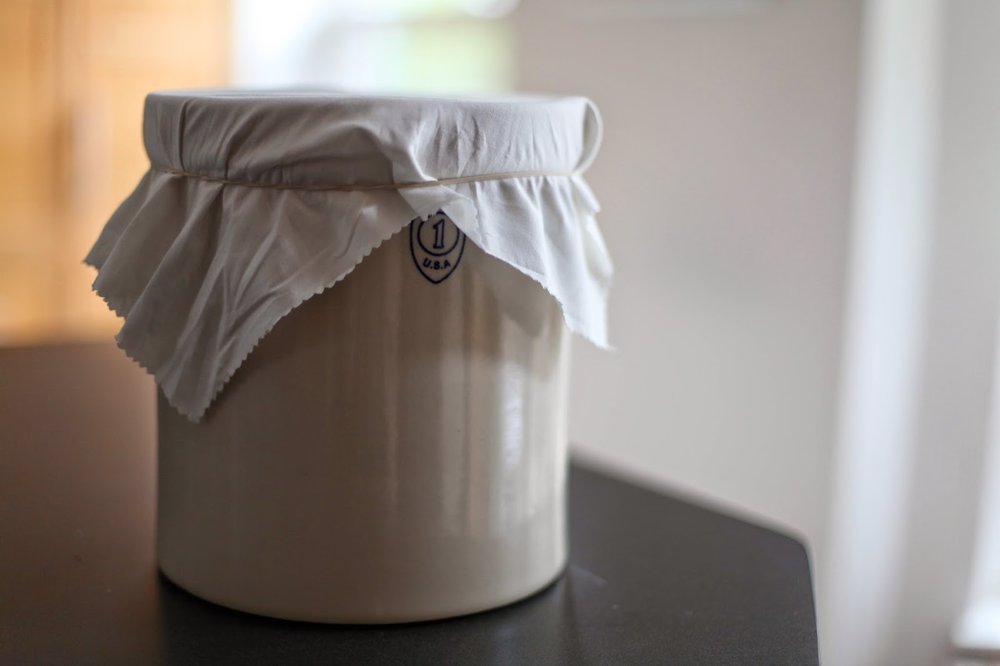
a 1-gallon glass container or ceramic crock

a thin cotton cloth

a rubber band

a funnel

growlers or a pitcher for storage

Instructions

Begin by bringing 4 cups of the water to a boil in a large pot. Once boiling, turn off the heat and add the teabags. Let steep for 30 minutes. Once brewed, squeeze out as much liquid as possible from the teabags and discard. Add the sugar and stir until dissolved. Add in 8 more cups of water to bring the mixture to room temperature. Transfer to your gallon-size brewing receptacle.

Add the SCOBY to the jar with the tea as well as the already-made kombucha. Add in more water until you have an inch and a half of space between the liquid and the lip of the jar. Drape your cloth over the top and secure with the rubberband.

Place the jar in a non-disruptive place in your home (mind you there will be a faint smell of vinegar around the jar at all times) and let the mixture brew for a week. After the week is up, the kombucha is ready and can be bottled. Remove the SCOBY and place on a plate. Transfer the liquid from the jar to your pitcher or growler with a funnel, setting aside another 2 cups for the next batch. Wash all of your brewing materials and begin the process again!

Pane con Formaggio

There was a time in my life where I came very close to giving up all I had worked for to escape everything and bake bread for a living. It was almost three years ago actually, mere days from my college graduation. After spending 4 years studying film and media and finding nothing remotely close to an internship opportunity I, on a total whim, drove an hour away to an artisan bread shop and asked for a job. I think it was a combination of the stress of the oncoming “real world” combined with the influence of a pastry internship I was doing at the time, but at that moment it seemed like the only option for me.

I was given a tour of the production facility and after an informal interview was told I could take on a 3-week stage and, if that went well, could start working the night shift. After that, I went back to my house, feeling confused and very small in the world, and simultaneously terrified yet excited. I then sat fully clothed in my tub and cried for at least 3 hours. Needless to say that was a low point in life. After much thought, I came to my senses, turned down the offer, and started on the path to where I am today (not baking bread for a living).

Despite all of this though, baking bread is still one of those tasks that I enjoy the most. I like its precision and simplicity, I like the meditative state you can achieve while kneading dough, and patiently waiting for it to undergo all of its scientific changes and processes. Starting from the bare minimum and then the rise, the transformation, and the development into something complex and new. It’s a little like how I was on that day years ago, and really any time I go through some sort of life shift. All that’s needed is time to sort everything out.

So now, sorting everything out, I make bread. The recipe, yet again, comes from the genius of Jim Lahey and his no-knead method where the most important ingredient is time. This Pane con Formaggio (cheese bread) is just as simple as the others with the same spongy interior and crackling crust but each slice is riddled with pockets of salty cheese and lots of freshly cracked pepper. It’s wonderful as a part of a charcuterie platter with prosciutto, cornichons, and dried apricots and I can’t wait until it gets stale so I can turn it into croutons for a salad. You can also choose between various firm or semi-firm cheeses to customize it to your own tastes!

Pane con Formaggio
From Jim Lahey’s My Bread

Ingredients
3 cups (400 grams) bread flour
2½ (200 grams) Pecorino, Asiago, aged Fontina, or any other salty firm or semi-firm cheese, cut into half-inch cubes
1 tsp. salt
¾ tsp active-dry yeast
½ tsp cracked black pepper
1 1/3 cups room temperature water

In a medium bowl stir together the flour, cheese, salt, yeast, and pepper. Pour in the water and use a wooden spoon or your hands to combine the mixture into a shaggy, sticky dough. Cover the bowl with plastic wrap and let sit at room temperature for 12-18 hours.     

Once this first rise is done, scrape the dough onto a floured surface. Carefully use your hands to lift up the edges of the dough into the center and shape it into a ball. Dust a clean kitchen towel liberally with flour and place it inside of a medium bowl so that the edges hang over. Place the dough into the bowl, seam side down, and cover the dough with the overhanging cloth. Place in a warm spot to rise for 1-2 hours until almost doubled in size.

30 minutes before the dough is ready, preheat the oven to 475 degrees and place a covered 4½ - 5½ quart cast iron pot in the oven. When the dough and oven are ready to go, carefully remove the dutch oven and the lid and invert the dough into the pot. Place the lid back on the pot and return to the oven for 30 minutes. Remove the lid and continue to cook for 15-30 minutes, until deep golden. Use a wooden spoon to lift the bread and move to a cooling rack and wait until it's cool before slicing.

Chocolate Buckwheat Snacking Cake

As I’m writing this, I’m sitting outside in a t-shirt, cuffed jeans and bare feet. It’s reached about 70 degrees and daffodils and tulips are in full bloom. Life is on the upswing and I couldn’t be happier about it!

When the weather takes a turn like this, I find myself itching for more things to do. I begin to compile a list on my phone of projects to start working on: learn to make macramé plant holders and wall hangings, dust of the 35mm camera, run a half-marathon in 2 weeks, join a softball team, plant an herb garden, etc. My evenings and weekends become filled with excitement and activities and lots of time with friends and by the end of the days I am wonderfully exhausted with a feeling of living life to its fullest.

And with so much going on, it certainly calls for having a little bit of a pick-me-up in the afternoon. Maybe a cup of tea, maybe a little slice of a chocolate snacking cake. That sounds really nice, right? Who wouldn’t want a sliver or two of light and spongy soufflé-like almond buckwheat chocolate cake when the 4:00 hour of doldrums comes along?

Obviously this isn’t exactly my first go-around with this cake. It’s without a doubt one of my favorites, which makes it even more surprising that I’ve withheld it from you for so long. I love it because it doesn’t ask for much. I like to cut off a nice wedge and eat it alone, out of hand, but a little ice cream never hurt either. It can be started and out of the oven within an hour if you have to good time management going on and although it has a simple ingredient list, it’s still got a bit of a fancy flair too. It gets it’s lift from egg whites rather than gluten so it takes on a hybrid texture somewhere between soufflé and cake and the buckwheat flour combined with coconut oil and almonds makes it reminiscent of an Almond Joy.

It may be gluten free, but it takes no sacrifices for that. It is what it is and I really like it for that. I like the awkward little muffin-top edges it gets when it cools, after the center has fallen, the way it gets fudgier, and maybe even better, the next day, and the way it cuts easily with a butter knife so you can quickly sneak a piece when no one is looking. Sure it’s not exactly your quintessential “chocolate cake” but give it a try and you’ll see why this is the chocolate cake I come back to year after year.

Chocolate-Buckwheat Snacking Cake
Adapted from
Small Plates and Sweet Treats by Aran Goyoaga via David Lebovitz
Serves 8-12

Ingredients
6oz chopped semisweet chocolate
½ cup coconut oil
4 eggs, separated
½ cup unrefined granulated sugar
1/3 cup whole-milk yogurt
1 tsp. vanilla extract
½ tsp. salt
¾ cup almond meal
¼ cup buckwheat flour
toasted sliced almonds and cocoa powder for garnishing

Preheat the oven to 350 degrees and grease an 8-inch cake pan with coconut oil and line the bottom with a round of parchment paper.

Place the chocolate and coconut oil in a large heatproof bowl and set it over a pan of simmering water. Make sure the water does not touch the bottom of the bowl. Stir it periodically until it is melted. Once melted, set it aside for a few minutes to cool a bit.

In a separate medium bowl, whisk together the egg yolks, half of the sugar, the yogurt, vanilla, and salt. Once the chocolate had cooled some, slowly whisk that in as well. Using a rubber spatula, stir in the almond meal and the buckwheat flour.

Using a standing mixer, handheld mixer, or a good old-fashioned whisk, beat the egg whites until they form soft peaks. Gradually add in the remainder of the sugar, while mixing, until it forms firm peaks. One-third at a time, fold the egg whites into the chocolate mixture using a rubber spatula until just incorporated. Pour the batter into the prepared pan and bake for 25-28 minutes. The edges will look set and the center will still be a tiny bit wobbly. Let it cool in the pan for 10-15 minutes and then transfer to a cooling rack.  Once cool, top with a liberal dusting of cocoa powder and sprinkle with toasted sliced almonds.

Food Guide for a Quick Trip to Charleston, SC

This past weekend I took a whirlwind of a trip to Charleston, SC to celebrate my beautiful friend Kelly’s bachelorette party. I’ve been itching for the opportunity to check out this city after hearing about its up-and-coming food scene. It lived up to the hype too. In the 48 hours of time spent in the city, I had more giant flaky biscuits and jam than I’d like to admit, along with plenty of other southern favorites and a few unexpected gems along the way. But, in addition to meal after meal of fabulous eats and drinks, the pastel sunsets, palmettos, and quaint southern charm won me over. Charleston, it was a wild ride!

Two Boroughs Larder
It’s a quirky spot. It's open for breakfast for unique breakfast sandwiches and then switches to a trendy bar in the afternoon complete with $3 cans of beer for happy hour and one of the best bowls of ramen I’ve ever had (It comes with crispy pork confit, a soft-boiled egg and housemade noodles but I highly recommend adding on the sesame greens). They also sell provisions and pastries in the front room.

Jeni’s Ice Cream
If you know anything about the Jeni’s Ice Cream franchise you’ll know that they offer some crazy flavors along with the classics and to put it simply, it’s just really great ice cream. The 7 Layer Bar flavor was fab!

The Gin Joint
A great spot to grab some drinks and snacks with friends and definitely a place to order one (or more) of everything and have a tasting party. It’s got that speakeasy vibe and the drinks are seriously innovative. I went for a concoction called the “Banana Hammock” (Flor De Cana 7 Rum, Zaya 12 Rum, Banana, Pineapple, Vanilla Syrup, Lemon, Orgeat, Walnut Dram, Angostura Bitters) that had a distinct caramel nuttiness along with the sweet tropical flavors. Also definitely try out the grilled cheese that they somehow make it inside-out where the bread and meat are on the inside and it's concealed in a pouch of crispy, nearly-burnt cheese.

Hominy Grill
It’s called the best place for brunch in Charleston and I absolutely believe it. They have nailed the perfect southern breakfast, keeping things pretty classic in an “if it ain’t broke, don’t fix it” sort of mentality. I ordered the shrimp and grits (it’s a splurge but it’s so worth it) but also heard lots of happy words from those who got the “Charleston Nasty Biscuit,” a biscuit stuffed with a fried chicken breast and smothered in sausage gravy.

Firefly Distillery and Irvin House Vineyards
Definitely add this on to your to-do list if you have a chance. It’s about a 30-minute drive outside of the city (stop to see the Angel Oak Tree along the way) but it's quite the experience having the opportunity to try both Charleston wines and spirits at the same location. They make their wine from several varieties of muscadine grapes which are native to the Lowcountry. The distillery lets you try 6 of the many varieties of spirits made by firefly with wild flavors like mint tea vodka, apple pie and caramel moonshine, many fruity flavors, and a 100 proof white lightning moonshine which was quite honestly the smoothest shot I have ever had. Let me just say that after a combination of the two, you’ll definitely need to hang around and check out the farm animals for a bit before taking the drive back.

Stars Rooftop and Grill Room
An excellent spot for a fancy celebratory dinner. There are lots of tempting appetizers so my suggestion is to team up with someone in your party and pick several options to share rather than just sticking with a main course. The deviled eggs were light and tangy and topped with ham and roasted red peppers. We also got a skillet of the truffled Kennebec potato fries which we continued to eat long after we were full until they were completely finished. The fresh blueberry salad with granola, yogurt, and white balsamic was a refreshing in-between course before the spit-roasted chicken with Moroccan flavors and roasted carrots and sunchokes. The S’more Pie also makes for a show-stopping dessert.

And last but not least,

Toast!
Again, a classic southern breakfast. There will be a bit of a wait but if you can hold out it’ll be worth your time. Biscuits again are a must along with the fried green tomatoes.

Lemon Pasta with Bacon and Peas (and welcoming spring)

Spring is like a perhaps hand
(which comes carefully
out of Nowhere) arranging
a window, into which people look (while
people stare
arranging and changing placing
carefully there a strange
thing and a known thing here) and
changing everything carefully

spring is like a perhaps
Hand in a window
(carefully to
and fro moving New and
Old things, while
people stare carefully
moving a perhaps
fraction of flower here placing
an inch of air there) and
without breaking anything.

-E.E. Cummings

In literature, in art, in life, Spring is the time of change and new starts. It is a time to shake off the troubles that Winter brought and to look at the world with fresh new eyes, ready for what will come next. Now, more than any Spring before this in my live, have I felt it representing rebirth as a stronger more confident person and with a greater understanding of what I want to come. In the recent dying days of this Winter, I have plummeted to the bottom but already, with warmer and longer days and the encouragement of those around, I can already feel myself stepping up from that. And, for me at least, the feeling of rejuvenation generally turns into time in the kitchen, and yesterday, this is what resulted from that.

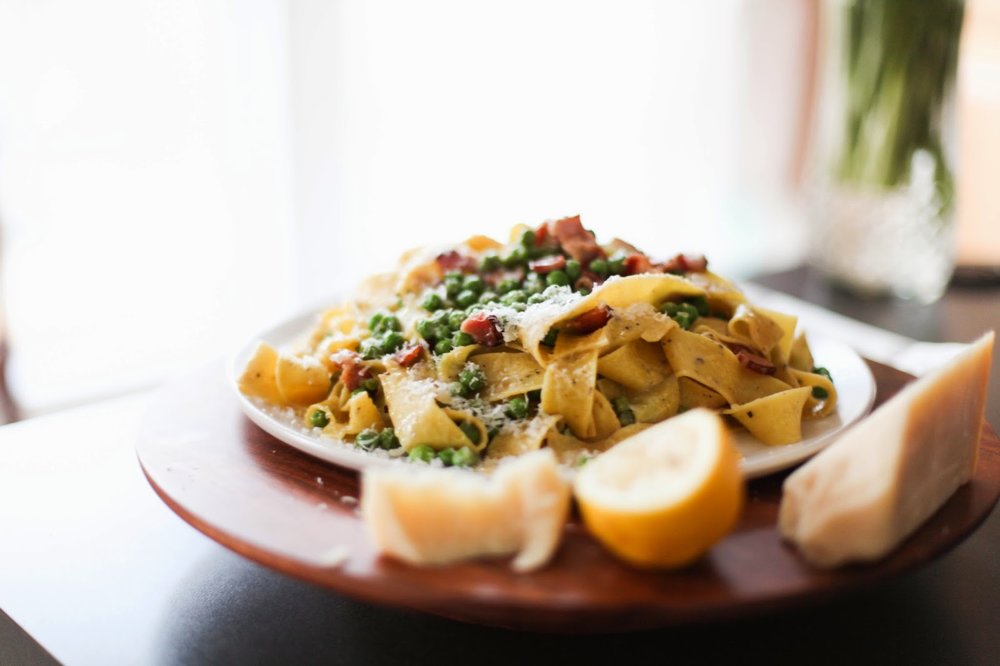
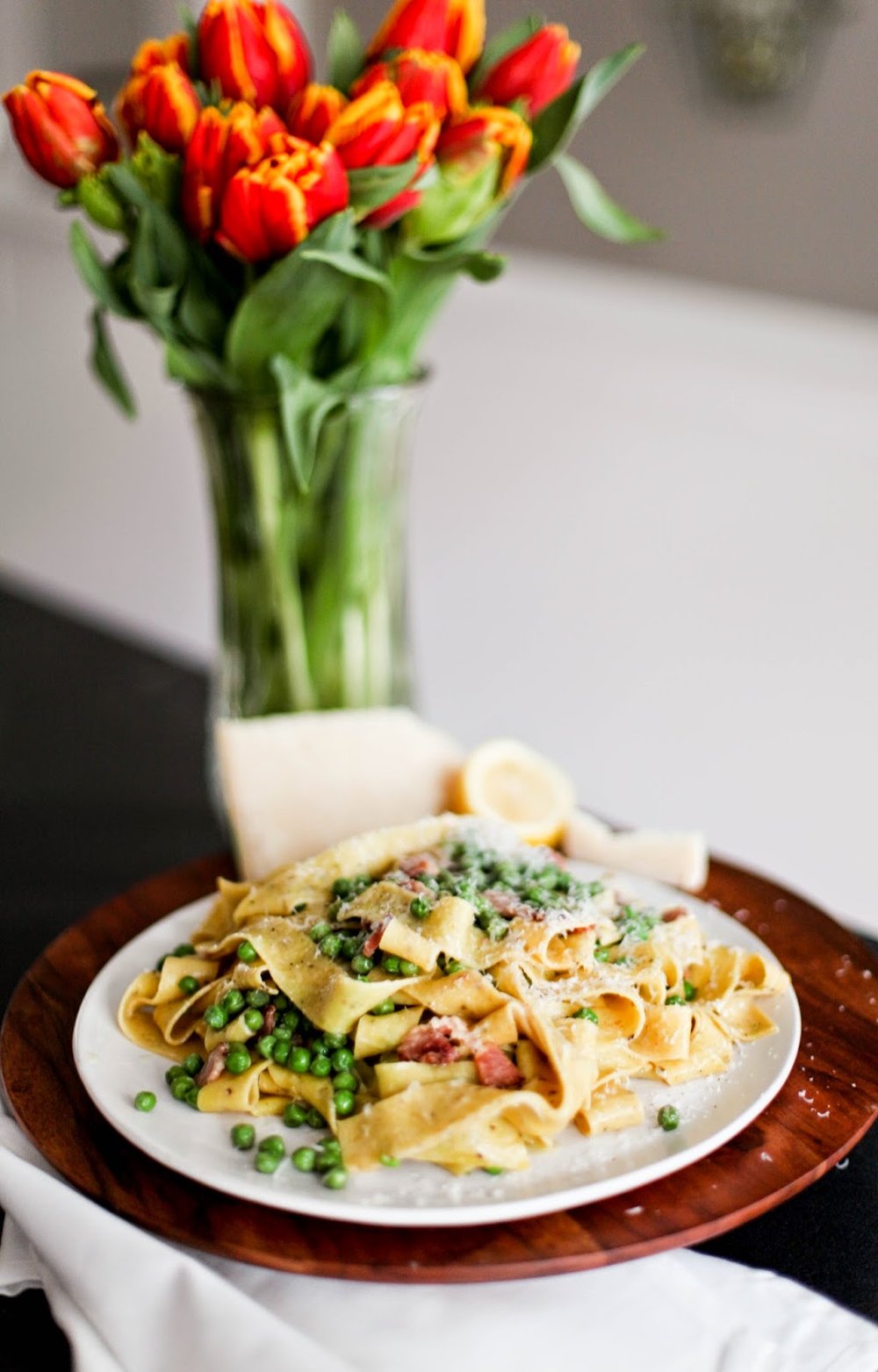
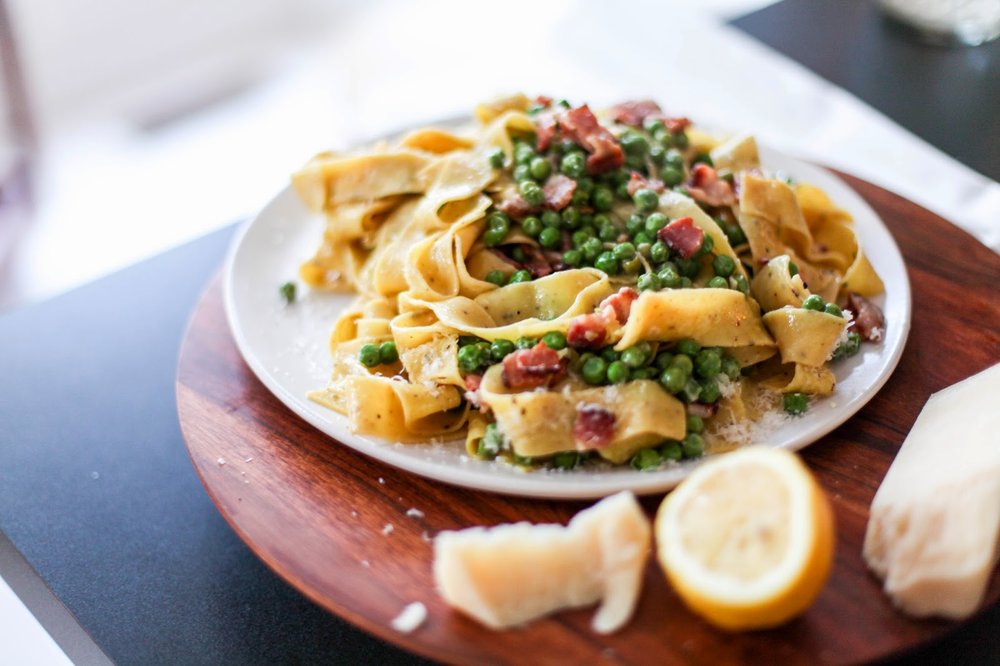
This pea and bacon pasta is very appropriate for the seasonal transition. It still contains the richness that we desire in the colder months from the bacon and mascarpone, while inviting in lemony freshness and bright pops of fresh peas. It’s a quick, throw-together dish that doesn’t necessarily require specific measurements or a strict following of ingredients, but more so encourages intuition and going on what seems and feels right. And when it done this way, it’s a freeing feeling resulting in a pretty fantastic dish. It's letting go, trusting instinct and the things you’ve learned to guide you, and finding yourself with something wonderful. It’s a nice way to welcome the forthcoming Spring.

Lemon Pasta with Creamy Bacon and Pea Sauce
Serves 4-6
Adapted from Jamie Oliver’s Jamie’s Food Revolution

Ingredients
6 slices of bacon
1 lb of pappardelle pasta (I highly recommend the Lemon Pepper Pappardelle from Trader Joe’s)
olive oil
salt and pepper
2 cups frozen peas
3 Tbs. mascarpone cheese
1 lemon
6 oz parmesan

Start by finely slicing the bacon and grating the parmesan cheese and set aside. Bring a large pot of salted water to a boil. Add the pasta and cook according to the package instructions.

Meanwhile add a bit of oil to a large frying pan and place over medium heat. Once hot, add the bacon. Crack some fresh black pepper overtop and cook until crispy. Once the bacon is cooked, add in the frozen peas and give everything a stir. Cook for about a minute and then add in the mascarpone cheese. Stir to combine.

By this time the pasta should be about done. Reserve about a half-cup of the pasta water and then drain the pasta into a colander. Add the pasta to the frying pan with the bacon and peas and toss everything together. Squeeze the juice of half a lemon overtop and add in a bit of the pasta water if the sauce needs to be thinned out a bit. Throw in the grated parmesan and a bit of salt, if needed, and give everything a quick mix before serving.